Executive summary
AI in production: What we brought back from Web Summit Lisbon 2026
The AI conversation has moved from promise to operations. Those already seeing results chose one workflow, one owner and more than one model.
The summary is in Portuguese.
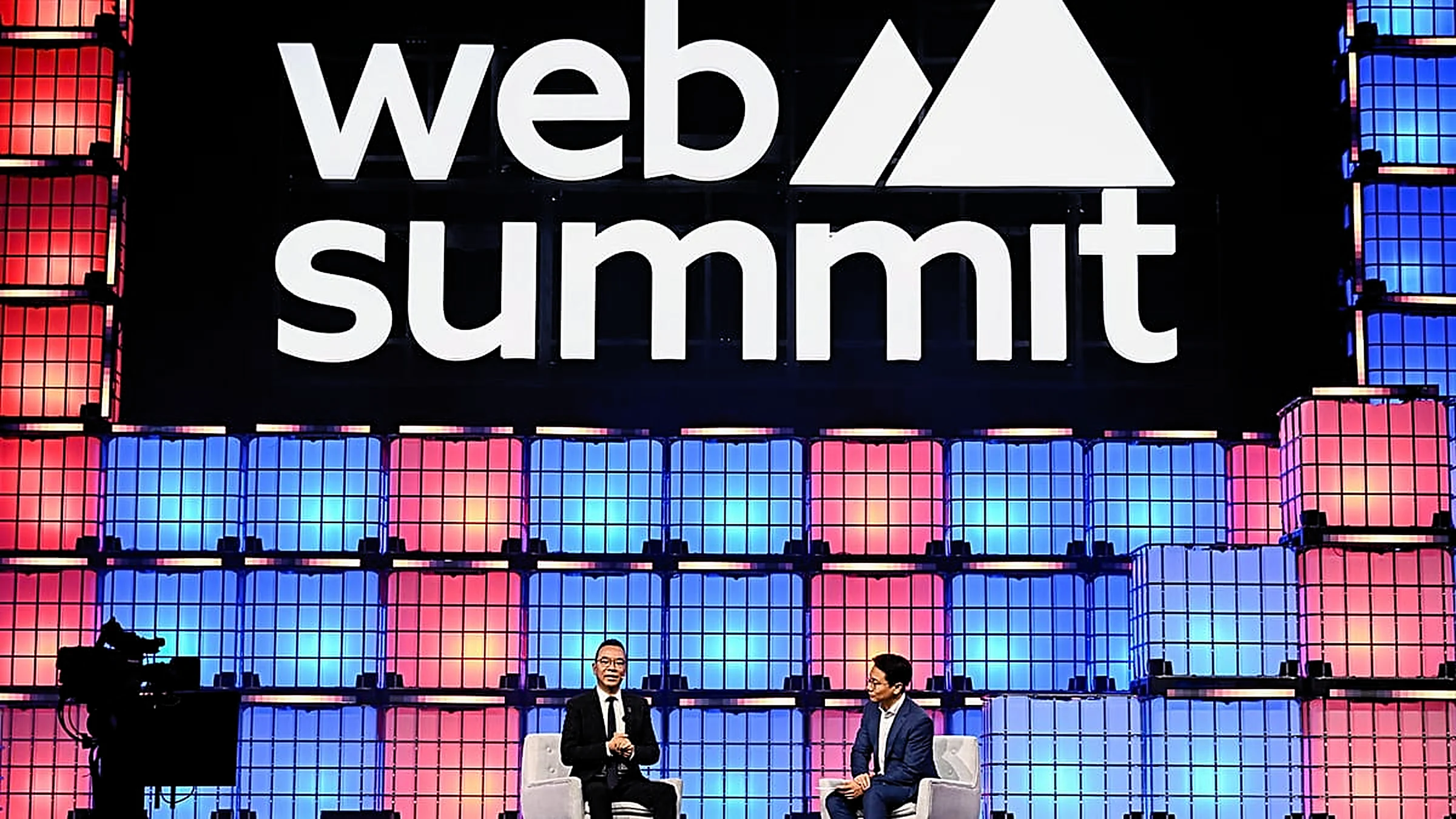
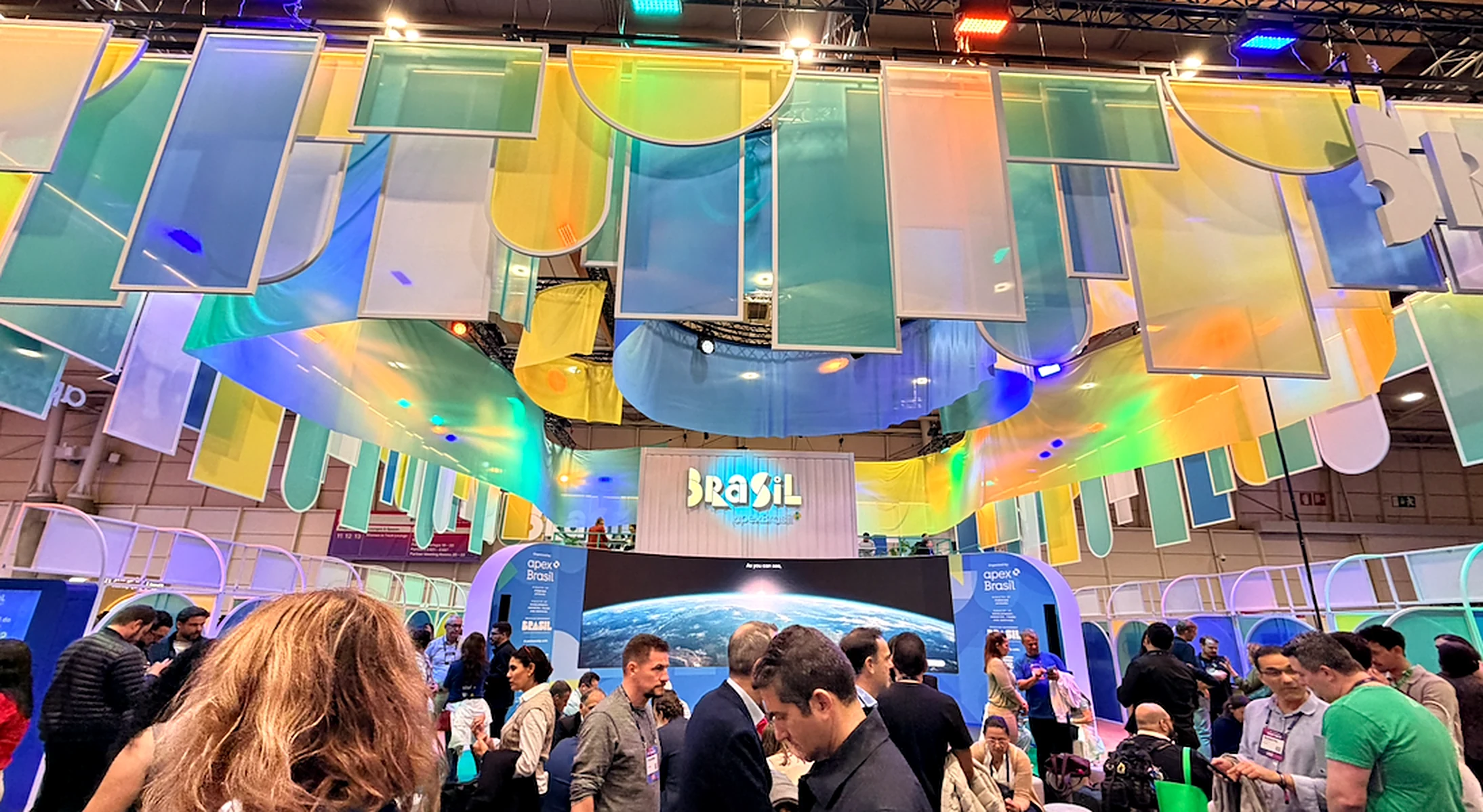
From November 8 to 12, BRQ executives attended 13 Web Summit Lisbon panels alongside invited clients.
On almost every stage, the topic was AI running for real, with cost, auditing and results on the balance sheet. At Maisa, a credit agent kept its accuracy and cut its cost per run by 89% by switching models.
What separates those who scale from those stuck in the pilot lies in the decisions around the model: which workflow to redesign, what context the AI receives, where it runs and how the brand presents itself to people and to agents. These are the four findings that follow.
Authors



Finding 01 Redesigned work, with an owner
AI delivers results when the company redesigns an entire workflow and gives it an owner and a target.
The landscape
For Battery Ventures, using AI to help people within the current process yields 2 to 3x. Deciding what is AI work and what is human work, and rebuilding the workflow from there, yields far more. At Maisa, half of all proofs of concept die before production: the last 10% of the work, such as consistency and cost, holds 90% of the difficulty.
What changes for decision-makers
The central decision is which workflow AI will take on, with which target and which owner. Middle management and report analysis are the most pressured functions, and that calls for change management.
How to act
- Redesign an entire workstream. Decide, step by step, what stays with AI and what stays with people.
- Agree on the metric before the first agent. Tokens consumed say nothing about value; the end-to-end workflow does.
At BRQ
At BBTS, AI-powered negotiation on WhatsApp increased conversions by 306%.
See the BBTS caseAt Santander, the personalized pitch with generative AI went from 35 minutes to 30 seconds, with 24% more effective contacts.
See the Santander case
Finding 02 Context first
Without the company's data and knowledge, AI returns the internet average.
The landscape
An LLM works with about 1 MB of text, in sequence. Companies keep terabytes in rows and columns it does not read, Fundamental observed. For Atlassian, AI only pays off when strategy, workflow and knowledge already flow well. At Williams F1, the biggest effort was change management.
What we are seeing
As BRQ sees it, the delay usually shows up before the agent: data that does not connect and legacy systems that hold decades of business rules. That is why data, reference architecture and modernization come first.
What changes for decision-makers
The AI budget needs to include organized data and knowledge. Without them, the agent speeds up the bottleneck.
How to act
- Organize the source of truth before the agent. Define where each agent reads from and who keeps that base up to date.
- Start with the knowledge that holds people back. Wherever someone has to ask before they can get work done today, an agent will get stuck too.
At BRQ
At ADAMA, the app was migrated with generative AI and maintenance and update costs fell by 40%.
See the ADAMA case
Finding 03 More than one model
Where the model runs and how many models the company uses have become decisions about cost and continuity.
The landscape
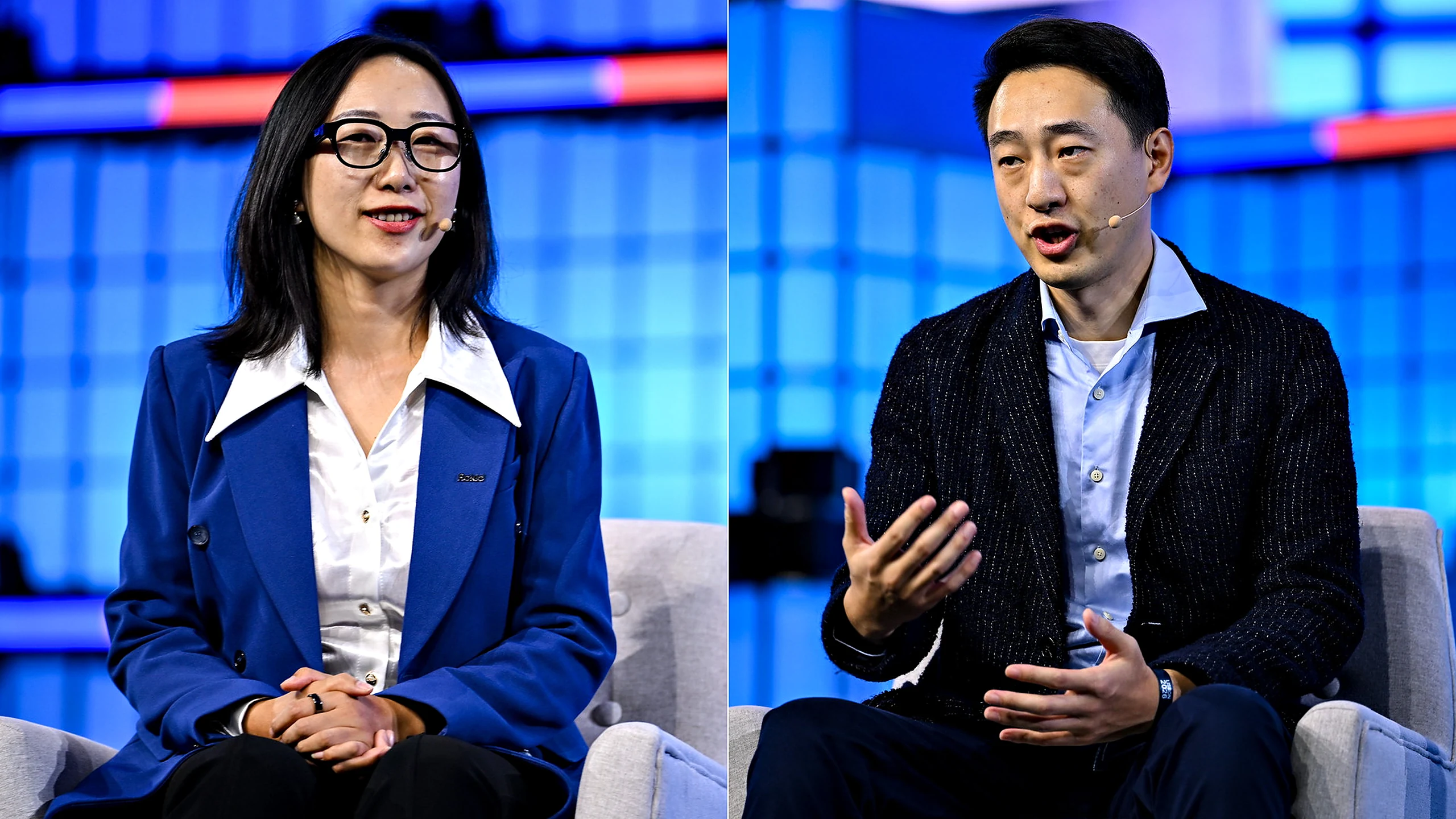
In June, US export controls took frontier models offline for weeks. Companies running several models, evaluated by task, switched routes and kept going, Picsart said. At the same time, open models reached frontier quality: they run in the client's region, with the client's data, for 30 to 50% less, according to Moonshot AI. Chinese companies lead this movement, but face regulatory scrutiny in the US.
What we are seeing
In financial services, where the model runs matters as much as accuracy. Latency, data sovereignty and infrastructure cost are part of the equation from the start, as Tencent and Intel argued at the Corporate Innovation Summit.
What changes for decision-makers
Choosing a model becomes a decision about architecture, cost and regulatory risk, revisited for each workflow.
How to act
- Evaluate each model by task. Have an alternative route ready for every critical workflow.
- Decide early where the model runs. Cloud, local region or on-prem change cost, latency and compliance.
At BRQ
At Banco Hyundai, FinOps and managed services cut operating costs by 50%.
See the Banco Hyundai case
Finding 04 A brand for people and for agents
With agents reading the web and AI producing at scale, a brand stands out for what the machine does not do and for the trust it builds.
The landscape
In May 2026, automated traffic overtook human traffic on Cloudflare's network, a year earlier than expected. For Matthew Prince, the company's CEO, agents do not click on ads and favor whoever has the most information online. At the same time, production became cheap: Higgsfield showed a series that would have cost US$500,000 made for US$10,000.
What we are seeing
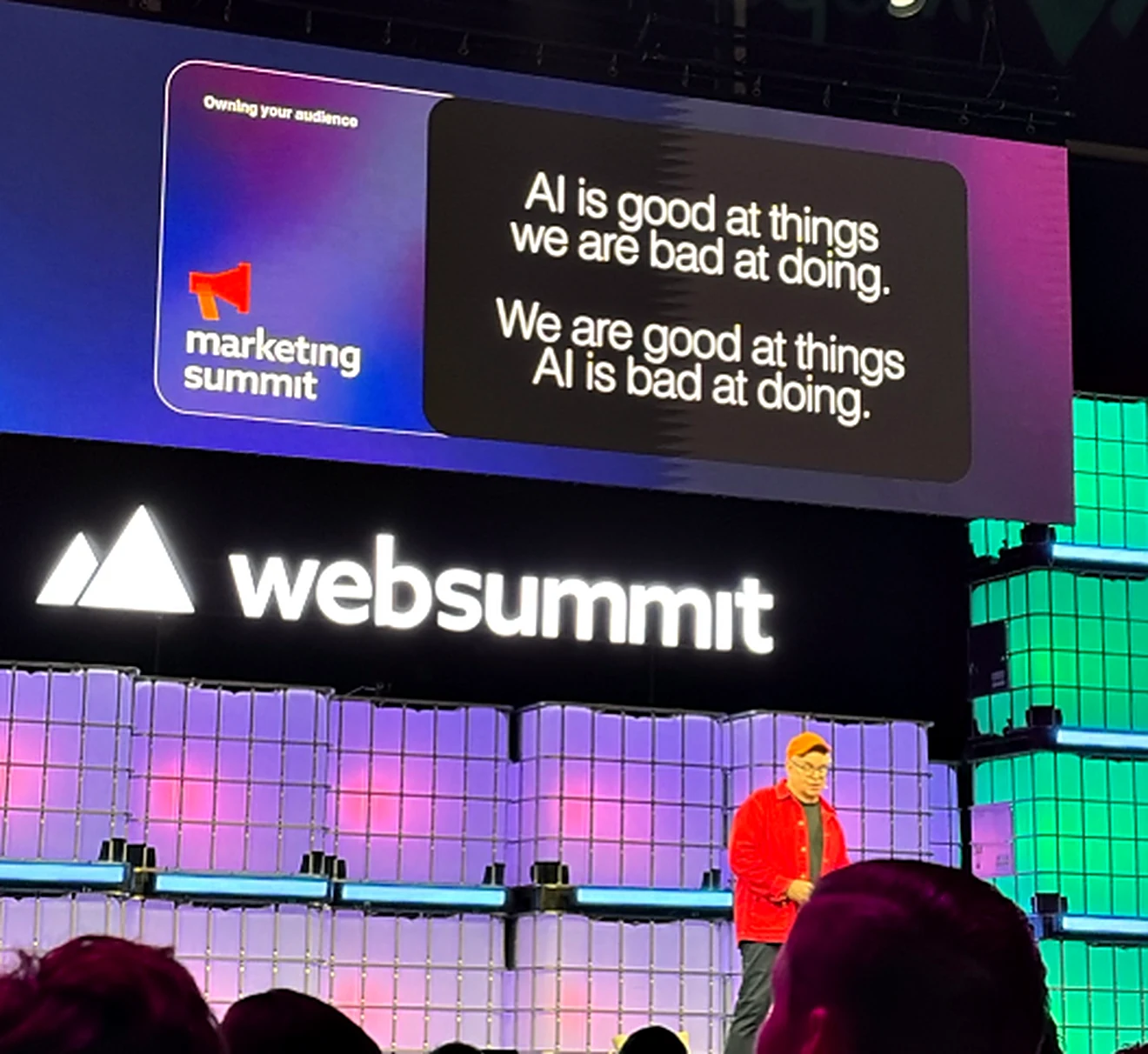
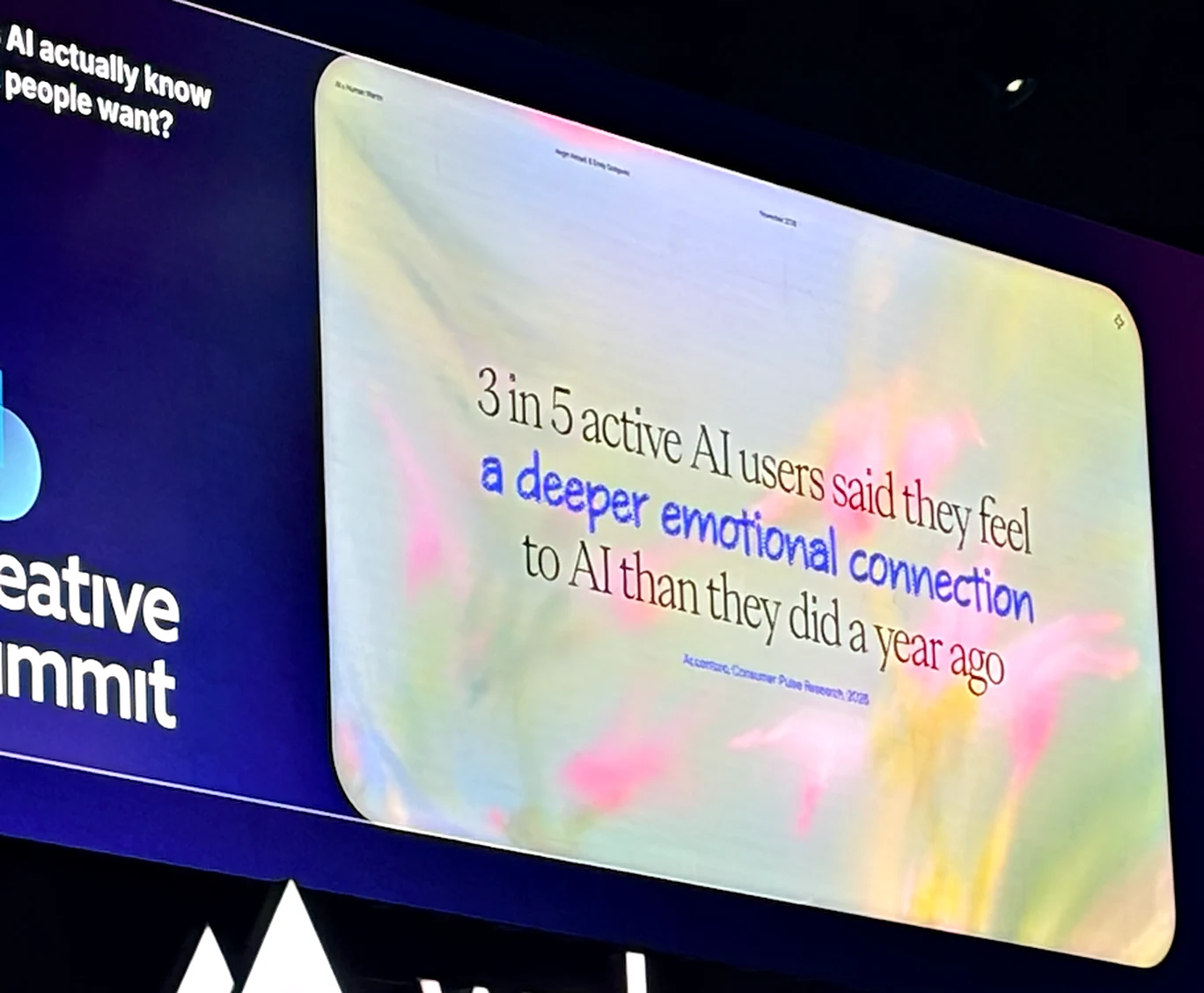
At the Marketing Summit, Brian Collins separated intentional work (KPIs, deadlines, best practices) from unintentional work (emotion, story, surprise), where a brand stands out. For Pablo Moura, Digital Director at BRQ, positive results appear when human experience works together with the machine's.
What changes for decision-makers
The bottleneck has moved from production to strategy: who decides the story, the audience and the tone. And with so much generated content, trust becomes a differentiator.
How to act
- Make product, price and content machine-readable. And strengthen the direct relationship with the customer, which is worth more once ads stop being seen.
- Use AI for the intentional and protect the rest. Automate the routine and leave what carries meaning to people.
- Disclose when a face, voice or character is generated. And get consent from whoever lends their likeness.
At BRQ
At Banco BV, AI increased the productivity of the in-house marketing agency by 50%.
See the Banco BV case
Map out your first AI workstream in production with us.
A 45-minute conversation with the people who were in Lisbon, to choose one workflow in your operation, with an owner, an agreed result and running in production from day one.
Schedule a conversation
We only use @brq.com emails in our official communications. If in doubt, reach us through the channels available at brq.com.
About the study
This summary brings together 13 panels attended by BRQ executives at Web Summit Lisbon 2026, from November 8 to 12, at the Corporate Innovation Summit, Centre Stage, the Marketing Summit and the Creative Summit. It is based on panel recordings and notes, official broadcasts, photos of the slides and press coverage. Figures presented by companies on stage are attributed to them. The full sources are in the PDF.
